A Brief History of St. Simons Island
Nestled along the Georgia coast, St. Simons Island is known today for its charming beaches, moss-draped oaks, and relaxed coastal lifestyle—but its story stretches back thousands of years. From Native American settlements to colonial conflicts, the island’s rich history is part of what makes it such a unique and meaningful place to visit.
Early Inhabitants: Native American Roots
Long before European settlers arrived, St. Simons Island was home to indigenous peoples, including the Guale Tribe. They thrived along the coast, relying on the island’s abundant natural resources—fishing, shellfish, and the surrounding maritime forests—for their way of life.
Artifacts like shell rings and tools found throughout the region offer a glimpse into these early coastal communities, whose connection to the land remains an important part of the island’s heritage.
Spanish Exploration & Mission Era
In the 1500s, Spanish explorers arrived along the Georgia coast, bringing with them a new era of influence. Missionaries established missions in the region, including one on St. Simons Island, aiming to convert and educate the native population.
One of the most notable missions was Mission San Buenaventura de Guadalquini. While these missions marked a significant cultural shift, they also introduced conflict and disease, dramatically impacting the indigenous population.
British Control & Coastal Defense
By the 1700s, control of the region shifted to the British. James Oglethorpe, founder of the Georgia colony, recognized the strategic importance of the island in defending against Spanish forces from Florida.
In 1742, the island became the site of the Battle of Bloody Marsh, where British troops successfully repelled a Spanish invasion. This victory helped secure Georgia as a British colony and remains one of the island’s most significant historical moments.
Plantation Era & Agriculture
Following the British victory, St. Simons Island entered its plantation era. Large plantations were established, producing crops such as cotton, rice, and timber.
Like much of the coastal South, this period was deeply tied to enslaved labor. The legacy of the Gullah Geechee people—descendants of enslaved Africans—remains an essential and influential part of the island’s culture today, especially in language, food, and traditions.
The Lighthouse & Maritime History
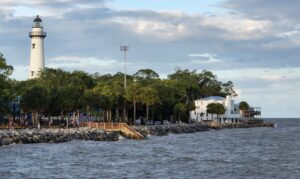
One of the most iconic landmarks on the island is the St. Simons Island Lighthouse. Originally constructed in 1810 and rebuilt in 1872 after being destroyed during the Civil War, the lighthouse has guided ships along the coast for generations.
Today, it stands as both a historic site and a symbol of the island’s enduring connection to the sea.
Modern-Day St. Simons Island
Today, St. Simons Island blends its rich past with modern coastal living. Visitors and residents alike enjoy a lifestyle rooted in history, nature, and Southern hospitality.
Historic landmarks, preserved natural spaces, and a strong sense of community continue to define the island—making it not just a vacation destination, but a place people return to year after year.
Why History Matters When You Visit
Understanding the history of St. Simons Island adds depth to every visit. Whether you’re climbing the lighthouse, exploring historic sites, or simply enjoying the view, you’re experiencing a place shaped by centuries of stories.
It’s this blend of past and present that makes the Georgia Coast—and St. Simons Island in particular—so special.
As you explore the rich history of St. Simons Island, there’s no better way to experience it than by staying in the heart of it all—browse our collection of St. Simons Island vacation rentals to find the perfect home for your coastal getaway.